
If you live in Polk County or anywhere across the Piney Woods, you already know that clogged gutters are a year-round problem, not a fall chore. Between pines dropping fine needles nine or ten months out of the year and mature oaks shedding leaves and acorns every autumn, East Texas rooflines carry a heavier debris load than most homeowners deal with elsewhere. Not every gutter guard on the market is built to handle that combination, and choosing the wrong type can mean paying for a gutter protection system that still leaves you climbing a ladder twice a season. Here is a straightforward look at the main types of gutter guards, how each one holds up against pine needles, oak leaves, and heavy regional rainfall, and what to weigh before you request an estimate.
Why Debris Load Looks Different in a Wooded East Texas Yard

Most gutter guard marketing is written for homeowners dealing with large, flat leaves that fall for a few weeks each year. That is not the reality for most properties around Livingston and the surrounding counties. Heavy tree coverage means gutters here are dealing with several kinds of debris load at once:
- Fine debris such as pine needles: thin, curved, and small enough to slip through gaps that would stop a maple leaf
- Oak leaves and acorns: larger but arriving in heavy seasonal waves
- Shingle grit: washes down the roof pitch with every hard rain
- Storm debris: twigs and seed pods that show up after any strong front moves through
A gutter guard that performs well against oak leaves alone can still fail completely against pine needles, which is why matching the guard type to your actual tree coverage matters more than picking whatever is cheapest or most heavily advertised.
Micro-Mesh Gutter Guards

How They Are Built
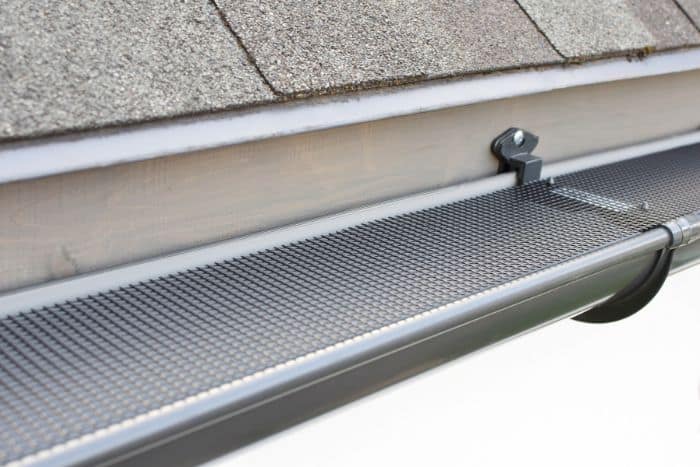
A micro-mesh gutter guard uses a fine stainless steel mesh, sometimes layered over a rigid aluminum frame, with mesh openings measured in microns rather than fractions of an inch. The frame snaps or screws onto the fascia or under the first row of shingles, and the mesh sits above the gutter channel to filter water as it flows in.
Debris and Pine Needle Performance
This is the one category built specifically for fine debris. Micro-mesh is generally the only gutter guard type that reliably keeps pine needles out of the gutter system, because the openings are small enough to block needle-sized particles while still letting rainwater through. It also handles oak leaves, acorns, and shingle grit without issue. For a property with heavy pine and oak tree coverage, this is usually the only type that actually solves the clogging problem rather than just reducing it.
Rainfall Handling
Because the mesh openings are so fine, water flow can slow slightly during the heaviest downpours, but a properly sized and properly installed micro-mesh system keeps up with the intense summer rainfall common to this region far better than most alternatives.
Lifespan and Maintenance
Stainless steel mesh resists rust and holds up well over time, often lasting fifteen to twenty years. Maintenance is not zero. Fine grit and pollen can build up on the surface of the mesh over several seasons, so an occasional rinse or brush-off is still part of ongoing gutter cleaning and maintenance, just far less often than an open gutter.
Standard Mesh Gutter Guards

Standard mesh gutter guards, sometimes just called screen gutter guards, use a coarser plastic or aluminum mesh with larger openings than micro-mesh. They are common, inexpensive, and easy to find at any home improvement store.
- Debris handling: Good against oak leaves and larger seasonal debris, poor against pine needles, which slip straight through the wider mesh openings
- Rainfall handling: Handles typical rain well, but heavier storms can push debris against the mesh and slow water flow
- Lifespan: Plastic versions degrade in UV exposure faster than aluminum or stainless steel, often needing replacement within five to eight years
- Maintenance: Needles and grit that get through still settle in the gutter channel, so cleaning frequency drops but does not disappear
This type suits homes with mostly large-leaf trees and little to no pine coverage. For a yard with even moderate pine cover, standard mesh is usually a half measure.
Perforated Aluminum Screens

Perforated aluminum gutter guards are solid aluminum panels punched with small round holes rather than a woven mesh. They are rigid, hold their shape well, and are a step up in durability from plastic screen guards.
- Debris handling: Reliable against leaves and heavier debris, but the holes are still larger than pine needles need to pass through, so needle-heavy yards will see buildup
- Rainfall handling: The rigid aluminum body handles heavy rainfall without sagging or bowing, and the holes rarely clog with grit the way finer materials can
- Lifespan: Aluminum resists corrosion well and typically lasts twelve to fifteen years
- Maintenance: Needs periodic clearing of anything larger than the perforation size, along with occasional surface debris removal
Reverse-Curve (Surface Tension) Gutter Guards

How They Work
A reverse-curve gutter guard, also called a surface tension gutter guard, uses a curved nose that directs rainwater around a bend and down into the gutter channel through surface tension, while solid debris is meant to slide off the front edge and fall to the ground.
The East Texas Downpour Problem
This is where reverse-curve systems tend to struggle in this region. Surface tension guards are designed around a specific, moderate water flow rate. When Southeast Texas gets one of its intense summer downpours, the sheer volume of water can overshoot the curve entirely instead of following it into the gutter, sending rainwater straight off the roofline and onto the ground below rather than into the downspout. Homeowners with steep roof pitch or large roof sections feeding into a single run of gutters are especially likely to see this kind of water overflow during storm season.
Debris and Maintenance
Reverse-curve guards handle oak leaves reasonably well and shed most large debris automatically. Pine needles are a weaker point, since some will still cling to the curve or wash into the channel during heavy rain. Lifespan is generally strong, often fifteen-plus years for quality aluminum systems, but the water flow issue during heavy rainfall is a real trade-off to weigh for wooded, storm-prone properties.
Foam Gutter Guards

Foam gutter guard inserts are triangular foam blocks that sit directly inside the gutter channel, letting water soak through while blocking debris from settling on top.
- Debris handling: Blocks larger leaves fairly well but does very little against pine needles or fine debris, which work into the foam itself over time
- Rainfall handling: Foam can become waterlogged and slow water flow during heavy rainfall, and it does not hold up well long term in a wet climate
- Lifespan: Shortest of the common options, often needing replacement within two to five years as the foam breaks down, discolors, or allows moss and plant growth to take root in it
- Maintenance: Requires the most frequent attention of any guard type on this list, and pine needle debris embedded in the foam is genuinely difficult to remove
Brush Gutter Guards

A brush gutter guard is a cylindrical brush, similar to a large pipe cleaner, that sits inside the gutter and is meant to let water pass between the bristles while catching debris on top.
- Debris handling: Works reasonably well for larger leaves, but pine needles pass through or get tangled in the bristles rather than being blocked
- Rainfall handling: Can restrict water flow once debris builds up between the bristles, particularly during heavy rainfall
- Lifespan: Bristles compress and lose shape over time, typically needing replacement within five to seven years
- Maintenance: Debris still collects around and within the brush, so gutter cleaning frequency is only modestly reduced compared to an unprotected gutter system
Matching Guard Type to Your Actual Debris Load

The type of gutter guard that makes sense for a home with a couple of large oaks in the yard is not the type that makes sense for a property surrounded by mixed pine and oak tree coverage. As a general rule:
- Heavy pine and oak debris load: Micro-mesh is the only type built to handle both fine and large debris together
- Moderate oak coverage, minimal pine: Perforated aluminum or standard mesh can perform adequately
- Light, large-leaf debris only, minimal tree coverage overall: Foam, brush, or basic screen guards may be sufficient and budget-friendly
- Storm-prone areas with steep roof pitch: Be cautious with reverse-curve systems regardless of tree coverage, since the water overflow risk is about rainfall intensity, not just debris type
Homeowners often assume all gutter guard types solve the same problem at different price points. In reality, they solve different problems, and picking based on cost alone tends to backfire in a yard with real tree coverage.
Why Installation Quality Matters as Much as Guard Type

Even a premium micro-mesh gutter guard will underperform if it is installed at the wrong angle relative to the roofline, gutter width, and roof pitch. Water flow depends on the guard sitting at a precise angle so that rainwater sheets across the mesh correctly instead of pooling, overshooting, or funneling debris into gaps at the fascia. The same is true of reverse-curve systems, where the curve has to be positioned exactly right for the surface tension effect to work at all.
This is part of why gutter guard types split into two rough categories:
- DIY-friendly options: Foam inserts, brush guards, and many standard screen guards are simple enough for a homeowner to install without special tools or precise angle calculations
- Professional installation recommended: Micro-mesh and reverse-curve systems perform much more consistently with professional installation, since both rely on exact positioning to do what they are designed to do
Professional gutter guard installation typically affects the overall gutter guard cost, but for the two guard types that actually solve fine debris and pine needle problems, that added cost is usually what makes the difference between a system that works and one that looks the same but does not.
Two Practical Buying Factors to Check Before You Get an Estimate

Beyond debris load and rainfall performance, two smaller details are worth confirming before committing to any gutter installation:
- Gutter width and profile: Not every gutter guard fits every gutter system. Homes with standard 5-inch gutters need guards sized and profiled to match, and a mismatch can create gaps that undo the whole point of the gutter protection system
- Roof warranty: Some gutter guard installation methods involve fastening under the first row of shingles. Confirm with your roofing manufacturer or installer that this method will not void an existing roof warranty before installation begins
Neither of these should turn into a lengthy buying process on its own, but both are worth a five-minute conversation with whoever handles the installation.
No Gutter Guard Eliminates Cleaning Entirely

It is worth saying plainly: no gutter guard type removes the need for gutter maintenance altogether. What a well-matched gutter protection system does is reduce cleaning frequency, sometimes from twice a season down to once a year or less, but it does not eliminate the task. Gutters that stay clogged, whether from clogged gutters full of pine needles or oak debris packed against a poorly matched guard, still lead to water damage, pooling water at the foundation, and ongoing moisture problems around the roofline. Clogged gutters and standing water are also a leading contributor to mosquito activity and other pest pressure around a home, since stagnant moisture near the foundation and fascia creates exactly the conditions many pests look for.
Knowing your own tree coverage, debris load, and typical rainfall pattern is the starting point for choosing the right gutter guard type. From there, a professional gutter guard installer can walk through gutter guard cost, material options like aluminum, plastic, or stainless steel mesh, and expected lifespan for your specific roofline.
Get Ahead of Standing Water and Pest Pressure

Standing water and clogged gutters do not just damage your home; they create the exact conditions that attract mosquitoes, ants, and other pests looking for moisture near your foundation. If you are dealing with pest pressure connected to drainage issues around your Polk County home, contact Broken Arrow Pest Control to schedule an inspection and get a plan built around your property’s specific tree coverage and moisture problem areas.